Floors Built for Commercial-Grade Daily Demand
Commercial epoxy flooring in Jacksonville for warehouses, showrooms, and service bays with heavy equipment traffic
Performance Epoxy focuses on commercial work in Jacksonville because the scope is defined before the crew arrives—clients specify surface requirements, traffic loads, and finish standards upfront, which keeps the job structured and on schedule. That clarity matters on commercial sites where downtime has a real cost. Warehouses, service bays, showrooms, and manufacturing floors each place different demands on a coating system, and those demands determine how the material is selected and applied.
Commercial jobs are run with both crews on a single site until the work is complete before moving to the next project. Concrete preparation follows specification: existing coatings, sealers, and contaminants are removed, and the surface is ground to a profile that allows the epoxy to bond properly. The epoxy is then applied at greater material depth than standard residential specifications—a deliberate choice that separates floors lasting fifteen years from ones that chip or delaminate under load. Performance Epoxy is actively building capacity with a third crew to handle multiple commercial jobs simultaneously without reducing material standards or site supervision on any one project.
Arrange an on-site assessment to review your floor's current condition and specify the coating system that matches your facility's traffic and chemical exposure requirements.
How Commercial Epoxy Handles Industrial-Level Floor Stress
What separates a commercial epoxy system from a standard coating is material thickness and the precision of the prep work beneath it. On commercial floors, the concrete profile—how open and clean the pore structure is—determines whether the epoxy bonds at a mechanical level or simply sits on the surface. Performance Epoxy grinds to the specification the coating requires, removes all contaminants, and monitors cure throughout application. Heavier commercial use calls for higher mil thickness; chemical exposure areas may require specific additive formulations blended into the coating layer.
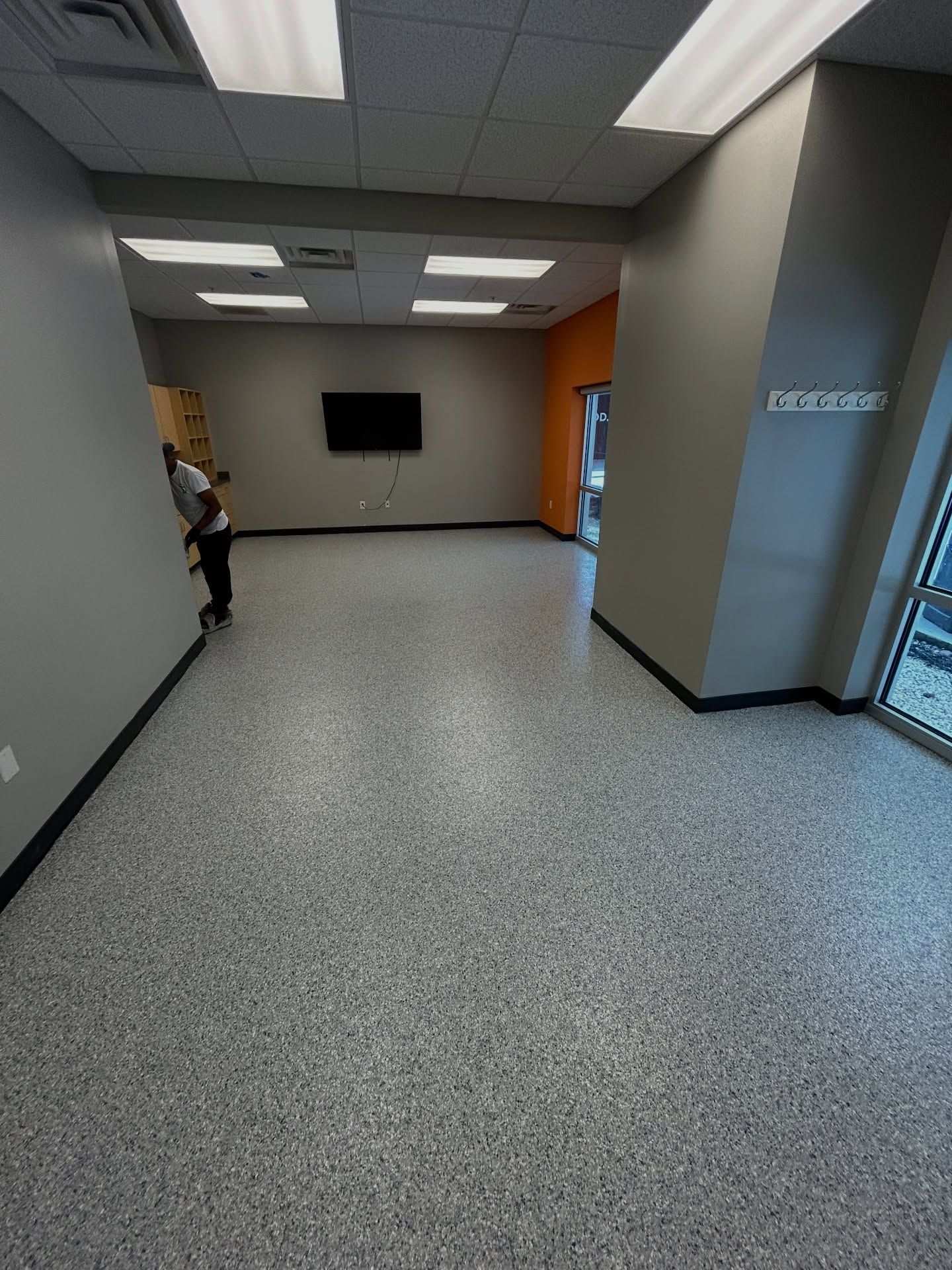
Once complete, the floor presents a uniform, professional surface that resists scuffing from equipment pads, holds up under repeated forklift passes, and does not show chemical staining from routine facility spills. The difference is visible in the surface consistency and in what does not happen over the next several years—no peeling at seams, no lifting at joints, no surface breakdown in high-traffic lanes. Jacksonville commercial properties in Orange Park and across the wider metro area benefit from a coating system applied at the depth that handles real operational loads rather than foot traffic estimates.
Commercial floors often include multiple zones—loading areas, office corridors, and production floors—each with different load and finish requirements. Performance Epoxy accounts for those transitions in the coating specification, so the floor performs consistently across the full facility rather than at a single average standard.
What Commercial Property Owners Ask About the Work
Commercial flooring projects involve decisions that affect operations, downtime, and long-term maintenance. These answers address how the work is actually performed and what drives the key decisions on site.
What concrete preparation is required before commercial epoxy is applied?
Diamond grinding removes all existing coatings, sealers, and surface contaminants, then opens the concrete's pore structure so the epoxy forms a mechanical bond rather than a surface adhesion. The crew confirms the concrete profile matches the coating specification before any material is applied—skipping this step is the primary cause of delamination on commercial floors.
How does material depth affect how a commercial epoxy floor performs over time?
Higher mil thickness distributes equipment load across a larger cross-section of the coating, reducing stress concentration at any single point. Floors applied at standard residential depth will show seam separation and surface wear within months under forklift or heavy cart traffic.
What should a commercial client specify before the project begins?
Traffic type, load weight, chemical exposure, and finish requirements should all be confirmed before the coating system is selected. Performance Epoxy structures commercial jobs around client-defined specifications, which eliminates mid-project changes that delay completion.
When is the floor ready to accept equipment traffic after installation?
The floor must reach full cure before heavy equipment is reintroduced—partial cure allows the coating to compress under load before it has reached working hardness. Cure time is monitored throughout the job and confirmed before the facility resumes full operations.
How does the epoxy system handle chemical exposure in service bays or manufacturing areas?
Chemical-resistant additives are blended into the coating layer for zones where spills are frequent. The formulation is selected based on the specific chemicals present—a general-purpose additive is not appropriate for facilities using acids, solvents, or petroleum-based fluids on a daily basis.
Performance Epoxy also installs commercial epoxy flooring in Ponte Vedra Beach, Orange Park, St. Augustine, Fernandina Beach, and Palatka. To discuss your facility's specific floor requirements and get a coating system matched to your operations, contact Performance Epoxy directly to schedule a site visit.