
Failed Epoxy Floors Diagnosed Before Any Material Is Applied
Epoxy floor repair in Jacksonville for floors that are peeling, cracking, or delaminating from the concrete surface
Peeling, cracking, and delaminating epoxy floors share a common pattern: the failure starts at the interface between the coating and the concrete, not at the surface. When epoxy separates from the slab, the cause is almost always inadequate surface preparation, insufficient material thickness, or exposure to something the original coating was not formulated to handle. Performance Epoxy repairs epoxy floors in Jacksonville by first identifying what caused the failure—because applying new material over an unresolved problem produces the same result in a shorter timeframe.
The failed area is examined to determine whether the epoxy separated from the concrete, from itself between layers, or from a sealer or contaminant that was present before installation. If the coating lifted from the slab, the epoxy is removed entirely in that zone, the concrete is ground back to bare, uncontaminated material, and the surface is re-prepped to the profile specification the repair coating requires. New epoxy is then applied at full thickness rather than as a patch over the edges of the failed area. Floors in neighborhoods like Middleburg and Fruit Cove include a range of residential and light commercial slabs, some installed over compacted fill that can shift slightly over time—where movement in the slab contributed to a seam failure, that condition is noted before the repair scope is finalized. The 15-year delamination warranty covers repair work only when the original Performance Epoxy installation was completed to specification and the failure was caused by a defect in prep or materials, not by customer misuse or exposure to incompatible chemicals.
To have a failed floor examined and get a clear explanation of what caused the failure, set up a diagnostic visit with Performance Epoxy before deciding on a repair approach.
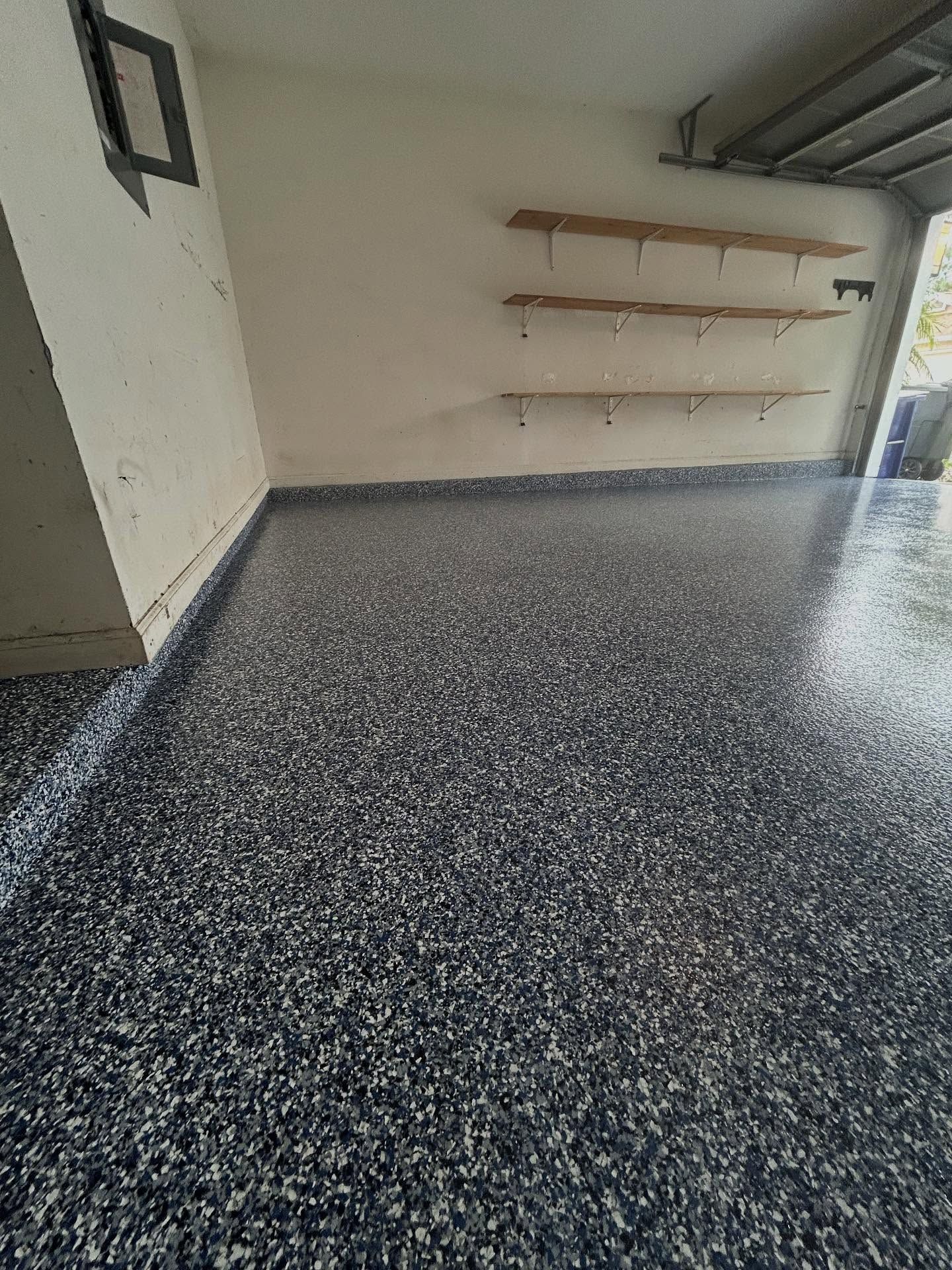
How Epoxy Repair Addresses the Cause, Not Just the Surface
Diagnosing an epoxy failure requires distinguishing between three different separation patterns. Adhesion failure at the concrete interface means the surface was not adequately profiled or was contaminated at the time of installation—the epoxy bonded to the contamination rather than to the concrete. Intercoat delamination between layers means the first coat was not at the correct cure stage when the next layer was applied, leaving a weak interface within the coating stack itself. Surface brittleness and cracking typically indicate the material was applied too thin for the load it received, or that a rigid formulation was used in a zone subject to minor slab movement. Each failure type requires a different repair sequence.
Once the repair is complete and cured, the repaired section bonds at the same adhesion strength as a new installation in that zone. The visual difference between the repaired area and the surrounding floor depends on how closely the replacement material matches the original—color lots and flake blends from older installations may not match exactly, and Performance Epoxy explains that limitation before work begins rather than after. What will not reappear, if the repair was performed correctly, is the lifting or separation at the same location.
Repair scope depends entirely on how far the delamination has spread beneath the surface. What appears as a small lifted edge at the visible perimeter often extends further under the coating than is apparent before grinding begins, and the actual repair area is confirmed during removal rather than estimated from the surface appearance alone.
What Property Owners Ask About Epoxy Floor Repair
Epoxy repair decisions depend on understanding what failed and whether the repair will hold under the same conditions the original floor faced. These answers address the specific decisions and process steps involved in diagnosing and repairing a failed epoxy floor.
How do you determine whether the epoxy failed because of poor prep or because of how the floor was used?
The separation pattern reveals the cause—if the epoxy lifts cleanly from the slab with the concrete surface still smooth, the concrete was never properly profiled. If the concrete surface comes with the epoxy when it peels, the bond was adequate but the slab itself had a weak surface layer. Chemical damage from incompatible cleaners typically appears as surface softening or discoloration rather than delamination, and that pattern is visible during examination.
Why is the failed epoxy removed completely rather than patched at the edges?
Patching over the edge of a delaminated section leaves the failure boundary intact beneath the new material, and that boundary continues to spread under load. Removing the coating back to stable concrete eliminates the failure interface and gives the repair material a clean surface to bond to at full adhesion strength.
What concrete preparation is required before new epoxy is applied during a repair?
The concrete exposed after removing the failed coating is ground to a fresh profile, removing any contamination or weak surface material that contributed to the original failure. The prep sequence for a repair is identical to a new installation—the only difference is the smaller area being worked.
How does the 15-year delamination warranty apply to repair work?
The warranty covers delamination that results from defects in prep or material application on floors Performance Epoxy installed. It does not cover failures caused by customer misuse, exposure to chemicals the coating was not formulated for, or damage from intentional impact. The crew explains which category the failure falls into during the diagnostic visit so the repair cost and warranty status are clear before work begins.
What can be done to prevent the same failure from recurring after the repair?
The repair addresses the original cause—whether that is re-prepping contaminated concrete, applying material at the correct thickness, or selecting a formulation suited to the chemical exposure present. Performance Epoxy explains what caused the failure and what change in preparation or material specification will prevent it from repeating in the same location.
Performance Epoxy also repairs epoxy floors in Ponte Vedra Beach, Orange Park, St. Augustine, Fernandina Beach, and Palatka. If your floor is showing signs of delamination or surface failure, have Performance Epoxy examine the affected area and identify the cause before selecting a repair approach.