Protective Coatings Applied at Specification-Grade Thickness
Concrete floor coating services in Jacksonville for garage floors, patios, and commercial spaces with surface breakdown or coating failure
A concrete floor that chips, stains, or shows surface breakdown within the first few years was almost certainly coated too thin or applied over improperly prepared concrete. Performance Epoxy applies protective concrete floor coatings in Jacksonville at material depth that exceeds standard specifications—a deliberate difference that separates a coating lasting fifteen years from one that begins failing within months of installation. Garage floors, patios, commercial spaces, and industrial facilities are all candidates for coating systems when the concrete beneath is sound but the surface can no longer handle the traffic or exposure it receives.
Every project begins with a concrete assessment: moisture content, existing sealers or coatings, and any surface damage are evaluated before a coating system is selected. Grinding removes old coatings and opens the concrete's pore structure to the profile the new coating requires. The coating itself—whether epoxy, polyaspartic, or a decorative flake system—is applied at a thickness the crew watches and controls throughout the pour. Cure and hardening are confirmed before the floor is cleared for traffic. Jacksonville Beach and coastal-adjacent properties present concrete that has often been exposed to salt air for decades, which can affect surface porosity and accelerate the breakdown of thin or improperly sealed coatings—identifying that condition during assessment changes how aggressively the surface needs to be prepared.
Schedule a concrete assessment to determine which coating system suits your floor's current condition and the traffic or exposure it will need to handle.
What Proper Concrete Coating Application Actually Requires
Coating selection is a decision point that affects the floor's performance over its full lifespan. Epoxy systems provide strong adhesion and chemical resistance suited for garage floors and commercial applications. Polyaspartic coatings cure faster and tolerate UV exposure better, making them appropriate for spaces with direct sunlight or where rapid return-to-service matters. Flake broadcast systems add both texture for slip resistance and visual depth, and the flake density controls how much of the base coat remains visible. Performance Epoxy selects the system based on what the floor will actually face—not a default recommendation applied to every project.
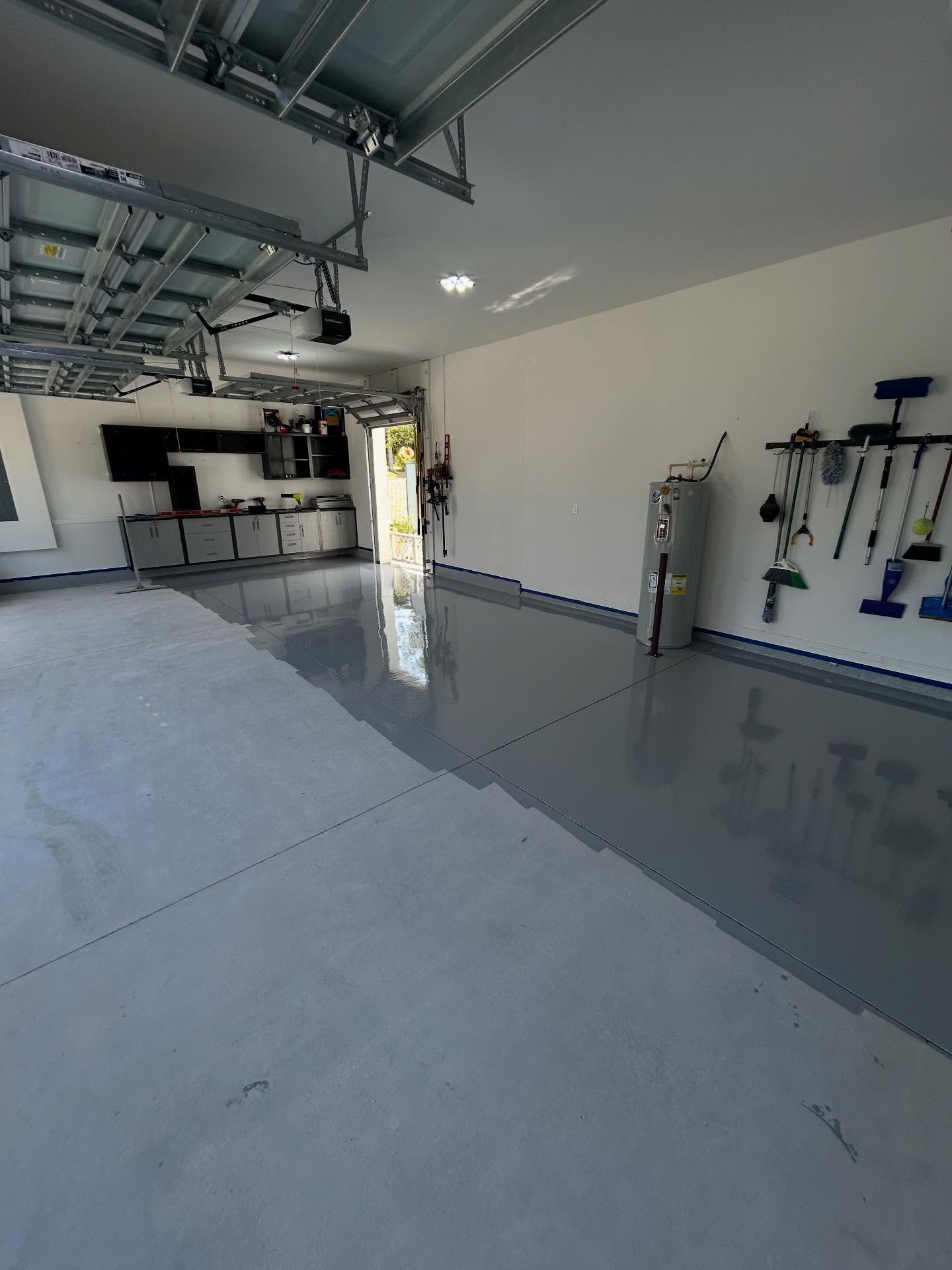
Once the coating is fully cured, the floor resists surface staining from oil, chemicals, and cleaning agents that would penetrate and mark bare concrete. Vehicle tires no longer leave marks that embed into the surface. The finished floor can be cleaned with standard mop-and-sweep maintenance without abrasives. What the client notices immediately is the uniformity of the surface—no low spots, no visible concrete texture breaking through, no variation in sheen that indicates uneven material coverage.
The coating system does not change the structural condition of the concrete beneath it—cracks, heaving, or slab settlement must be addressed before coating, not covered over. Performance Epoxy identifies existing damage during the assessment phase and separates what needs repair from what the coating itself will address, so the scope is accurate before work begins.
Questions Before Starting Your Coating Project
Coating decisions depend on what the concrete has been exposed to, what the surface will face after installation, and whether any prep work needs to happen before coating can begin. These answers explain the decisions made during a concrete floor coating project.
How does moisture in the concrete slab affect the coating process?
Moisture present at the slab surface or migrating up from below prevents proper adhesion—the coating bonds to moisture vapor rather than to the concrete itself, which causes early lifting. The concrete is assessed for moisture before any coating system is selected, and elevated readings change both the prep sequence and the primer used.
What is the difference between epoxy and polyaspartic coatings for a garage floor?
Epoxy provides stronger initial adhesion and is the better choice for floors with oil contamination or chemical exposure. Polyaspartic cures in a shorter window and handles UV exposure without yellowing, making it more appropriate for areas that receive direct sunlight. The right choice depends on how the space is used, not on a default product preference.
How many grinding passes are required before a new coating can be applied?
The number of passes depends on what is already on the concrete—a previously sealed floor requires more aggressive removal than bare concrete. The crew grinds until the surface profile reaches the specification the coating requires, not to a fixed number of passes.
What happens if the existing concrete has cracks or surface damage before coating?
Cracks must be filled and repaired before any coating is applied—coating over an active crack transfers the movement to the coating layer and causes it to split in the same location. The assessment identifies which defects need repair and which are stable enough to coat over without further intervention.
How do you confirm the floor is ready for traffic after the coating is applied?
Cure is monitored by time and by surface hardness testing rather than by appearance alone. A coating that looks dry at the surface may still be soft at depth, and traffic introduced too early compresses the uncured layer, reducing its long-term adhesion and surface hardness.
Performance Epoxy also applies concrete floor coatings in Ponte Vedra Beach, Orange Park, St. Augustine, Fernandina Beach, and Palatka. To review your floor's current condition and identify the right coating system, set up a site visit with Performance Epoxy before selecting a product or system.