Floors Built to Outlast Standard Coating Systems
Epoxy flooring in Jacksonville for concrete surfaces that degrade under chemical exposure, heavy traffic, or daily wear
Performance Epoxy in Jacksonville applies epoxy flooring systems to commercial, industrial, and residential concrete using material depths that exceed standard industry specifications. Older commercial buildings throughout Jacksonville—many of them constructed decades ago with bare concrete slabs designed for light industrial use—now face far heavier chemical and traffic loads than the original surface can handle without protection. That gap is exactly where a properly built epoxy system performs work that standard sealers cannot.
The process begins with thorough concrete surface preparation, which is the controlling factor behind the 15-year delamination warranty Performance Epoxy backs its work with. No coating system holds long-term without proper prep, and shortcuts at this stage are the primary reason epoxy floors fail. Once the slab is prepared to full specification, material is applied at greater depth than competitors typically use, producing a coating layer that resists wear, chemical contact, and heavy foot and vehicle traffic over the long term.
Arrange an on-site evaluation to review the condition of your concrete and discuss the right epoxy system for your space.
How Proper Material Depth Changes the Result
Most epoxy contractors apply coating at the minimum thickness specified by the manufacturer, which satisfies the label but leaves little margin for abrasion, point loading, or chemical exposure over time. Performance Epoxy applies material beyond those minimums intentionally—the added depth is what makes the difference between a floor that begins to wear within a few years and one that holds its finish under sustained use. For decorative finishes such as metallics, the crew monitors the pour and cure process directly, observing how the design develops and making adjustments in real time to ensure the finished appearance matches what was specified.
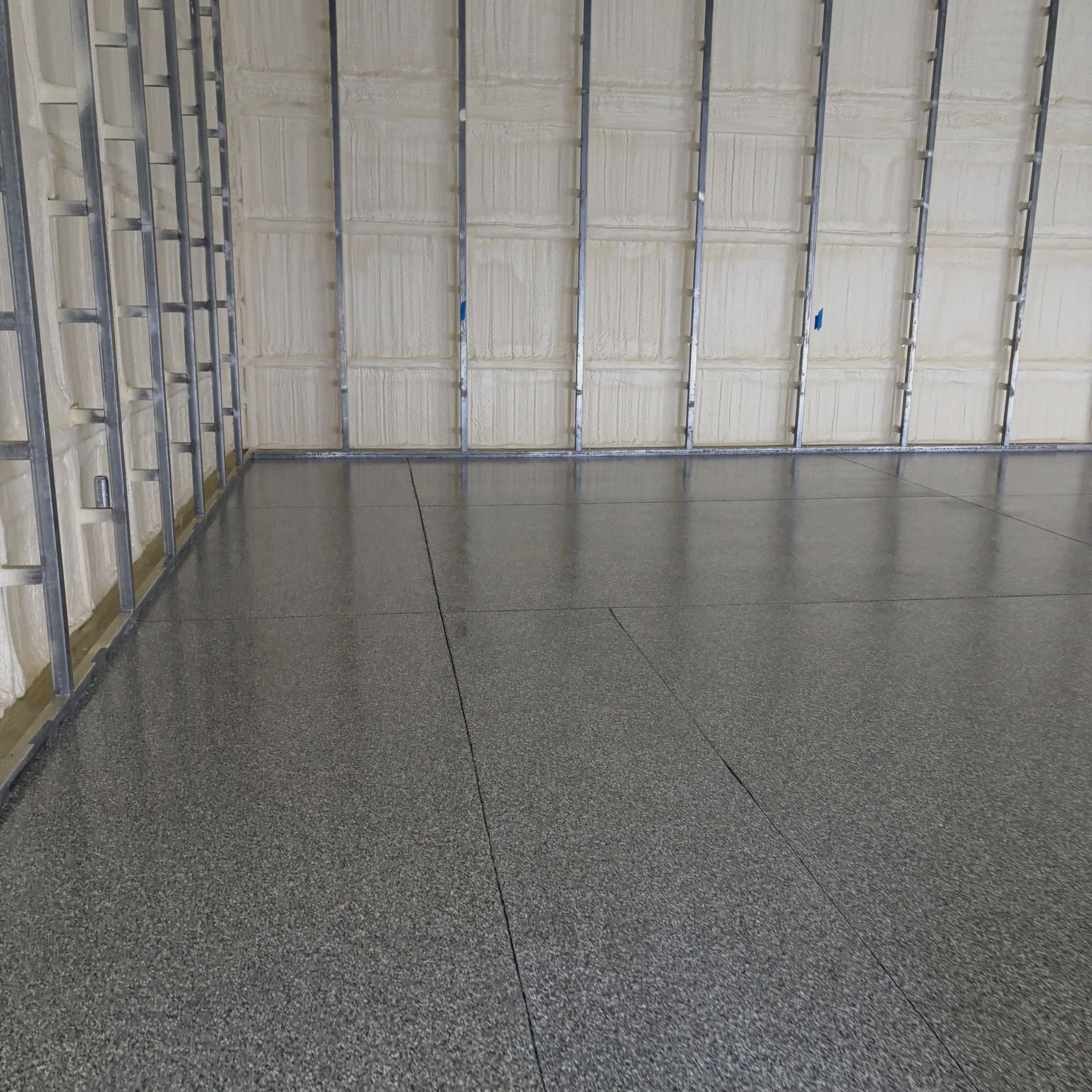
After installation, you will notice the surface is uniform in sheen and texture with no thin or uneven patches, and the floor responds to cleaning with none of the porosity that allows concrete to absorb oil, grease, or water. That impermeability is a direct result of both prep quality and coating depth—two variables that are difficult to evaluate by looking at a price quote alone.
Performance Epoxy is family-owned and has operated in the Jacksonville market for ten years, completing more than six jobs per week across both residential and commercial sites. The company is licensed and insured, and the 15-year delamination warranty applies to floors prepped and installed to the full process standard the crew follows on every job.
Answers About How the Work Is Done
The questions below address how epoxy flooring is applied, what the process involves, and what to look for in the finished result. Understanding these details helps property owners evaluate the quality of any installation before work begins.
What does concrete preparation actually involve before epoxy is applied?
Preparation typically includes mechanical grinding or shot blasting to open the concrete surface so the epoxy bonds at a structural level rather than sitting on top. Without this step completed to full specification, the coating will eventually separate from the slab regardless of the material quality above it.
How does applying more material than the standard specification affect the floor's performance?
Additional coating depth increases the layer available to absorb abrasion and impact before the bond line is reached, which extends the working life of the floor in high-traffic and high-load situations. Thinner applications meet the minimum but leave no margin for demanding use conditions.
What should you look for in a finished epoxy floor to confirm it was installed correctly?
A properly installed floor will be uniform in gloss level and color across the entire slab, with no thin edges near transitions or low spots where the coating pooled. You can also check that the surface resists water absorption—water should bead rather than darken the floor.
How does the construction era of a Jacksonville commercial building affect the epoxy installation process?
Many older industrial and commercial slabs in Jacksonville were poured with lower-strength concrete mixes or have surface contamination from decades of use, both of which require more aggressive mechanical prep before coating to achieve a reliable bond. Newer construction tends to have cleaner, harder surfaces that respond differently to preparation equipment.
Why does monitoring the cure process matter for decorative epoxy finishes?
Metallic and decorative systems develop their visual pattern during the pour and initial cure window, and the result can shift based on ambient conditions and application technique. Watching the floor as it cures allows the installer to identify and correct any areas where the pattern is not developing as intended before the material sets.
Performance Epoxy works with commercial property owners, industrial facility managers, and homeowners throughout Jacksonville who want an epoxy system installed to a standard that holds up over time. Performance Epoxy also installs
epoxy flooring in Ponte Vedra Beach, Orange Park, St. Augustine, Fernandina Beach, and Palatka. Call 904-316-6441 to request a free estimate based on your specific concrete and use conditions.