
Concrete Ground to a Durable, Lasting Finish
Concrete polishing in Jacksonville for retail, office, and showroom floors where coating systems are not the right fit
A polished concrete floor does not rely on a coating to deliver its surface—there is no film layer to peel, chip, or delaminate. That distinction matters for commercial property owners in Jacksonville who manage high-traffic retail floors, showrooms, or office spaces and have watched coated floors fail at the edges, in wheel paths, or wherever maintenance crews use floor machines. Performance Epoxy polishes concrete floors in Jacksonville by grinding progressively through finer diamond grits until the aggregate opens and the surface itself carries the gloss.
The sequence of work starts with a coarse grit to remove surface damage, staining, adhesive residue, or any previous coating that would interfere with the grind. Each subsequent pass uses a finer grit, and the decision of where to start that sequence depends on the condition of the existing slab—a floor with heavy pitting or an uneven surface requires more passes at the coarser end before advancing. Once the desired level of sheen is achieved, a penetrating sealer is applied to protect the surface against staining and make routine cleaning straightforward. The precision involved in controlling grit sequence and depth is what separates a professional polish from a surface that looks dull or uneven under retail lighting.
To get a clear assessment of what your existing concrete slab can support in terms of finish level, arrange an on-site evaluation with Performance Epoxy.
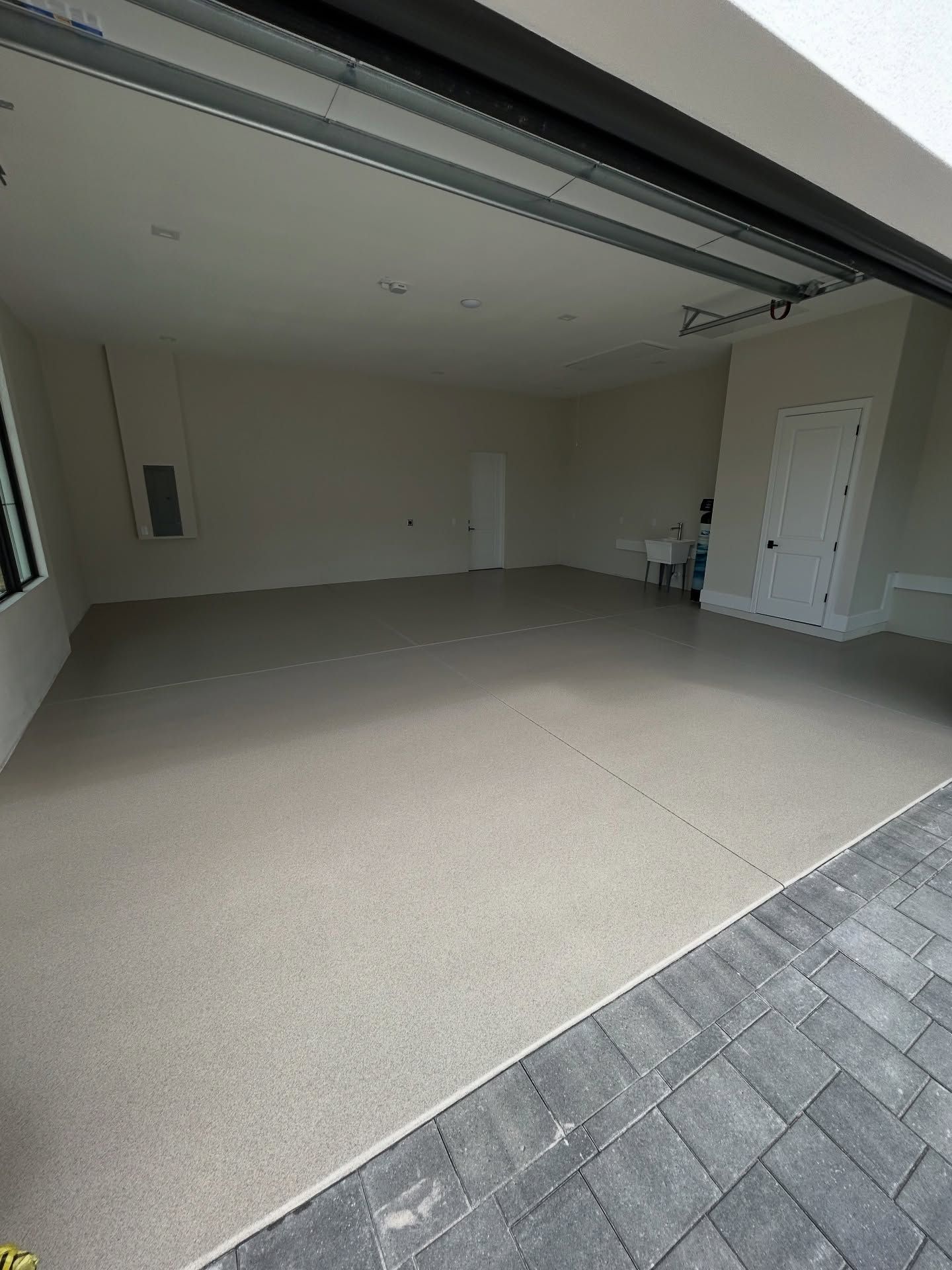
What Proper Concrete Polishing Requires
Concrete polishing is not a coating application reversed—it is a controlled material removal process. The crew grinds actual concrete away in measured increments, and each pass is evaluated before advancing to the next grit level. Moving through the grit sequence too fast leaves scratches from the coarser stage visible in the finished surface under direct light, which is one of the most common indicators of rushed work. Performance Epoxy controls that sequence by checking the floor at each stage rather than running a predetermined number of passes regardless of what the concrete shows.
Once polishing and sealing are complete, the floor presents a surface that hardens further with foot traffic over time—a property of polished concrete that coated floors do not share. Jacksonville commercial and retail spaces in areas like Ponte Vedra Beach and Callahan that carry consistent daily foot traffic will see the floor maintain its appearance without the periodic stripping and recoating that keeps epoxy systems serviceable. There are no lap lines, no soft spots, and no sections where the floor responds differently underfoot.
The finish level is also a decision made at the outset based on facility use. A high-gloss finish works for showrooms and retail where appearance is part of the customer experience, but a matte or satin level may be more appropriate for a warehouse floor or a facility where reflectivity could create a visibility problem under overhead lighting. The sealer choice also affects maintenance requirements and chemical resistance, and those decisions are made based on what the floor will actually face.
What Property Owners Ask About the Work
The answers below address how concrete polishing is performed, what the existing slab condition determines, and what changes once the work is finished—covering questions that regularly come up before a commercial or retail polishing project begins.
What condition does the existing concrete need to be in before polishing can start?
Most slabs in good structural condition can be polished, but heavy cracking, significant spalling, or deep pitting may require patching or grinding to level before the finish sequence begins. The starting grit is chosen based on a direct assessment of the slab surface rather than a standard default.
How is the grit sequence determined during a polishing job?
The crew starts coarse enough to remove the surface condition present and evaluates the floor after each grit stage. Advancing too quickly leaves visible scratches in the finished surface, so the decision to move to the next grit depends on what the floor shows, not a fixed schedule.
Why does polished concrete harden over time in a way that coated floors do not?
Polished concrete is densified during the sealing process, which fills the surface pores and makes the concrete itself harder. Ongoing foot traffic continues that process, so the floor actually becomes more resistant to surface abrasion with use rather than degrading.
What does the sealer applied after polishing do, and does it need to be reapplied regularly?
The penetrating sealer protects against liquid infiltration and staining without forming a surface film. Because it is absorbed into the concrete rather than sitting on top, it does not peel or wear away the way a topcoat does, and maintenance requirements are significantly lower than for coated floor systems.
How do you confirm the finished polish is uniform before the project is considered complete?
The finished surface is inspected under direct light at multiple angles to check for grit scratches, inconsistent sheen, or areas where sealer application was uneven. A correctly polished floor shows consistent gloss across the entire surface with no visible variation in the grind pattern.
Performance Epoxy also polishes concrete floors in Ponte Vedra Beach, Orange Park, St. Augustine, Fernandina Beach, and Palatka. To review your slab's current condition and discuss what finish level makes sense for your space, request a consultation with Performance Epoxy directly.