
Fast-Cure Floors Built for Heavy Use
Polyaspartic floor coatings in Jacksonville for facilities that cannot afford extended downtime after installation
Performance Epoxy applies polyaspartic floor coatings in Jacksonville for commercial and residential customers who need a durable floor surface without waiting several days before resuming operations. Polyaspartic chemistry cures in 24 to 48 hours depending on temperature conditions during application, making it a practical choice for warehouses, retail floors, commercial kitchens, and garage slabs that carry real daily load. The coating bonds to prepared concrete at the same material depth that supports the 15-year delamination warranty Performance Epoxy backs on every project.
The process starts with concrete grinding to remove surface contaminants, laitance, and anything else that would compromise the bond. Opening the concrete surface is not optional—polyaspartic, like any high-performance coating, depends entirely on how well the substrate is prepared before material touches it. Once the surface is ready, polyaspartic is mixed to specification and applied at a material depth calibrated to what that floor will actually face: foot traffic, forklift loads, and chemical exposure in a warehouse get a different treatment profile than a residential garage. The crew monitors application thickness and cure throughout, which matters because polyaspartic is less forgiving of inconsistency than slower-curing systems.
To discuss your facility's floor requirements and get a clear picture of what prep and application will involve, arrange an on-site evaluation with Performance Epoxy.
Why Polyaspartic Outperforms Standard Coating Systems
UV resistance is one of the performance differences that matters most for outdoor and semi-outdoor applications. Epoxy yellows under ultraviolet exposure, which means outdoor patios, covered parking areas, and exposed loading docks will show color shift and surface degradation over time. Polyaspartic does not yellow under UV load, which is why Performance Epoxy specifies it for any surface with direct or indirect sun exposure rather than treating it as a premium option only.
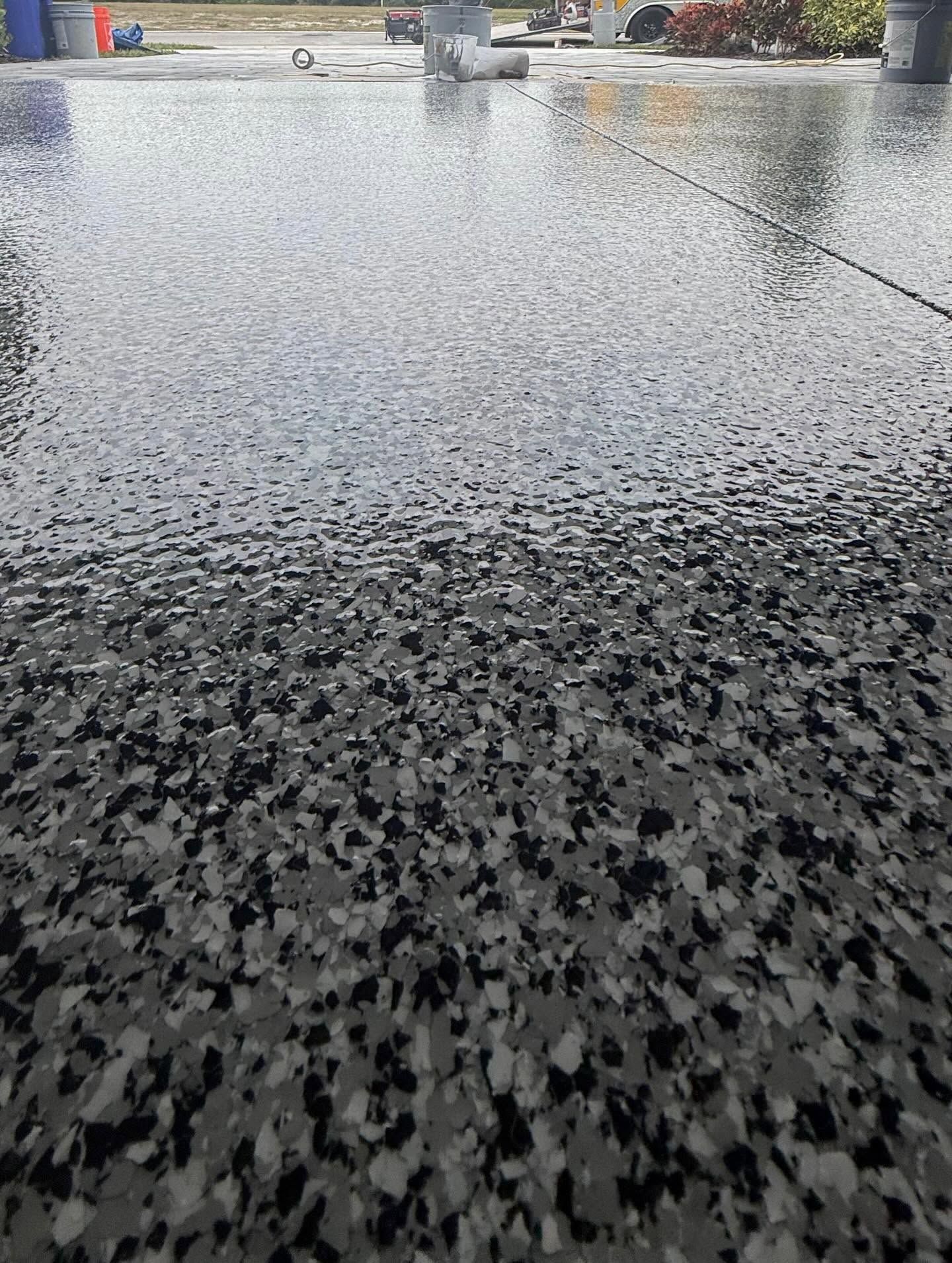
After the coating cures, the floor presents a uniform, hard surface with no soft spots, bubbling, or visible seams at lap lines. Jacksonville Beach properties with outdoor entertaining surfaces and commercial spaces in Orange Park with high foot traffic both benefit from the combination of early return-to-service and long-term surface integrity. What you will notice is a floor that does not flex underfoot, does not show tire marks from repeated vehicle traffic the way thinner systems do, and maintains its sheen without periodic recoating.
Polyaspartic is also a single-phase system in most applications, meaning fewer separate product layers than multi-coat epoxy systems. That reduces total installation time even before factoring in the faster cure, and it removes one potential failure point from the floor assembly. Broadcast aggregate can be added between coats for slip resistance where that is required by facility use or safety standards.
Common Questions About Polyaspartic Floor Coatings
The questions below address how polyaspartic coating work is actually done, what decisions get made during installation, and what property owners can expect once the floor is finished.
What does concrete preparation involve before polyaspartic is applied?
The concrete is mechanically ground to remove any existing coatings, surface hardeners, oils, or curing compounds that would block adhesion. This step is not optional—no coating, regardless of chemistry, will hold long-term on a surface that has not been properly opened and cleaned.
How does application thickness affect long-term performance?
Material depth is matched to the facility's use load. A floor that carries forklifts or pallet jacks needs a heavier build than a residential slab, and applying the same thickness to both situations produces predictably different results over time.
What makes polyaspartic a better fit than epoxy for Jacksonville commercial spaces with outdoor components?
Polyaspartic does not yellow under UV exposure, which means exterior patios, semi-covered areas, and loading aprons keep their original appearance far longer than epoxy-coated equivalents that see sunlight.
How do you know when the floor has fully cured and is ready for traffic?
Cure is evaluated by elapsed time, ambient temperature during application, and a physical check of the surface. The 24-to-48-hour return-to-service window assumes conditions within the normal working range—cooler temperatures will push cure toward the longer end of that window.
What should a property owner look for in a finished polyaspartic floor to confirm quality work?
A properly applied polyaspartic coating shows uniform sheen across the entire surface with no visible lap lines, no thin patches where the material was spread too wide, and no bubbling or pinholing that indicates moisture in the slab or application errors.
Performance Epoxy also installs polyaspartic floor coatings in Ponte Vedra Beach, Orange Park, St. Augustine, Fernandina Beach, and Palatka. To start the process for your facility or residential slab, contact Performance Epoxy directly and schedule a surface inspection before committing to a coating specification.