
Showroom-Grade Floors Built for Lasting Visual Impact
Metallic epoxy flooring in Jacksonville for premium residential and commercial spaces where appearance and long-term durability both matter
Concrete floors in high-end garages, showrooms, and commercial interiors across Jacksonville frequently get coated with standard epoxy or paint-grade sealers that fail to hold their appearance under foot traffic or UV exposure from large garage openings. That mismatch between what the space demands and what a basic coating delivers is the opening condition Performance Epoxy addresses with metallic epoxy systems applied at material depths that exceed standard specifications. Performance Epoxy in Jacksonville creates metallic floors where the visual design is actively managed during both the pour and the cure process—not left to chance.
Metallic epoxy develops its pattern while it is being poured and as it moves through the initial cure window. Unlike solid-color systems where the only variable is coverage rate, metallic finishes require the installer to watch the floor as the design forms and make real-time decisions about how the material is moving and blending. The concrete surface must first be prepped to full mechanical specification—this is the step that determines whether the coating bonds for the long term or begins delaminating at edges and transitions within a few years.
Schedule an on-site consultation to discuss finish options and review your concrete's current condition before any work is quoted.
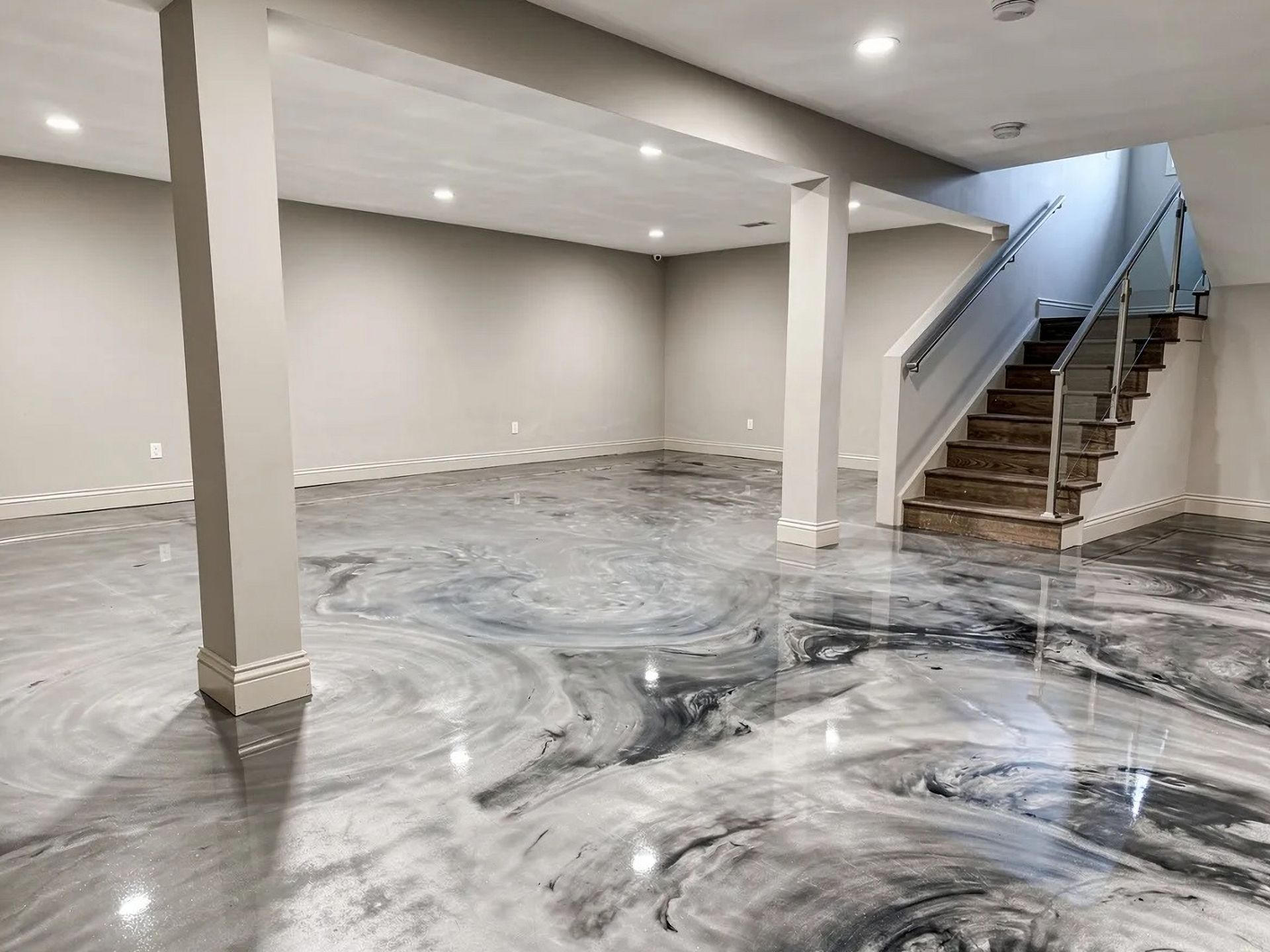
Why the Pour and Cure Window Defines the Finished Floor
The distinguishing factor in metallic epoxy installation is not the material itself—it is what the installer does during the window between application and full cure. Performance Epoxy's crew observes how the design is developing as the metallic pigment moves through the coating layer, adjusting application technique to produce a result that matches what was designed rather than whatever pattern emerged on its own. Material is applied at depth exceeding standard manufacturer specifications, which extends the structural life of the finished floor under the traffic loads typical in garages and commercial showrooms throughout Jacksonville Beach and similar high-use residential and commercial corridors.
Once the system has fully cured, the floor reflects light consistently across the entire surface, and the depth of the metallic effect is visible from multiple angles without flat or cloudy patches. Areas near transitions, drains, or perimeter edges—where thinner applications tend to show wear first—hold their finish because the additional material depth at those points provides the same structural margin as the field of the floor.
Performance Epoxy is family-owned, with a brother working alongside the owner on installations, and has operated in the Jacksonville market for ten years. The 15-year delamination warranty applies to every metallic floor installed to the full prep and application standard, and the company is licensed and insured. Free estimates are available for residential and commercial metallic projects.
What Property Owners Ask About the Work
Metallic epoxy involves a more active installation process than standard epoxy systems, and the questions below address how the work is performed, what preparation is required, and what the finished floor looks like in practice.
How is the metallic pattern controlled during installation?
The installer works the material during the pour using specific application techniques that direct how the metallic pigment moves through the coating layer, then monitors the surface as it cures to catch any areas where the pattern is developing differently than intended. This active observation window is what separates a controlled result from a random one.
What concrete preparation is required before metallic epoxy is applied?
The slab must be mechanically ground or otherwise profiled to open the surface and remove any contamination, sealers, or previous coatings that would prevent a structural bond. Skipping or shortening this step is the most common reason metallic floors delaminate at edges or high-traffic points within a few years of installation.
Why does material depth matter more for metallic systems than for standard epoxy?
Metallic pigments are suspended in the coating layer, and a thin application leaves less structural material above the bond line to absorb foot traffic and abrasion—the decorative layer itself wears faster. Applying at greater depth protects the visual finish while maintaining the structural performance of the coating system.
How does the property type affect how metallic epoxy is specified and installed?
High-end residential garages in Jacksonville's newer planned communities often have clean, relatively hard slabs that respond well to preparation, while older commercial concrete in converted industrial spaces may have surface porosity or contamination that requires additional prep steps before the metallic system can be applied reliably.
What does a properly installed metallic epoxy floor look like once it has fully cured?
The finish should be consistent in depth and reflectivity across the entire surface, with the metallic effect visible from multiple viewing angles and no dull or uneven patches near walls, drains, or perimeter transitions where preparation or material application was inconsistent.
Performance Epoxy handles metallic
epoxy installations for residential and commercial clients throughout Jacksonville where the visual result and the structural quality of the floor both matter. Performance Epoxy also installs metallic epoxy flooring in Ponte Vedra Beach, Orange Park, St. Augustine, Fernandina Beach, and Palatka. Call 904-316-6441 to request a free estimate and discuss finish options for your specific space.