
Concrete That Stops Absorbing Everything It Contacts
Garage floor epoxy coating in Jacksonville for residential slabs that show oil staining, surface pitting, or moisture damage from vehicle use
Uncoated garage concrete absorbs oil, brake fluid, and water at the surface level—staining the slab permanently and allowing the freeze-and-expand cycle of liquids inside the pore structure to accelerate surface pitting over time. Jacksonville residential garages built in communities like Middleburg and Fruit Cove typically have standard broom-finished slabs poured without any surface protection, which means the concrete's long-term condition depends entirely on what gets applied over it after construction. Performance Epoxy in Jacksonville coats those slabs with epoxy systems applied at material depths that exceed what industry-standard specifications require, producing a surface that seals the concrete completely and holds up under vehicle traffic and daily garage use.
The installation begins with thorough mechanical concrete preparation—the step that determines whether the coating bonds for the long term or begins separating at the edges within a few years. Once the surface is prepped to full specification, epoxy is applied at greater depth than a standard installation would include. For a residential garage handled by one crew, Performance Epoxy completes one job per day, giving the project focused attention from surface prep through final coat. Larger garage projects—commercial bays or multi-car facilities—bring both crews to the site to complete the work faster without extending across multiple days.
Contact Performance Epoxy to arrange a free estimate based on your garage's current concrete condition and the finish you want to achieve.
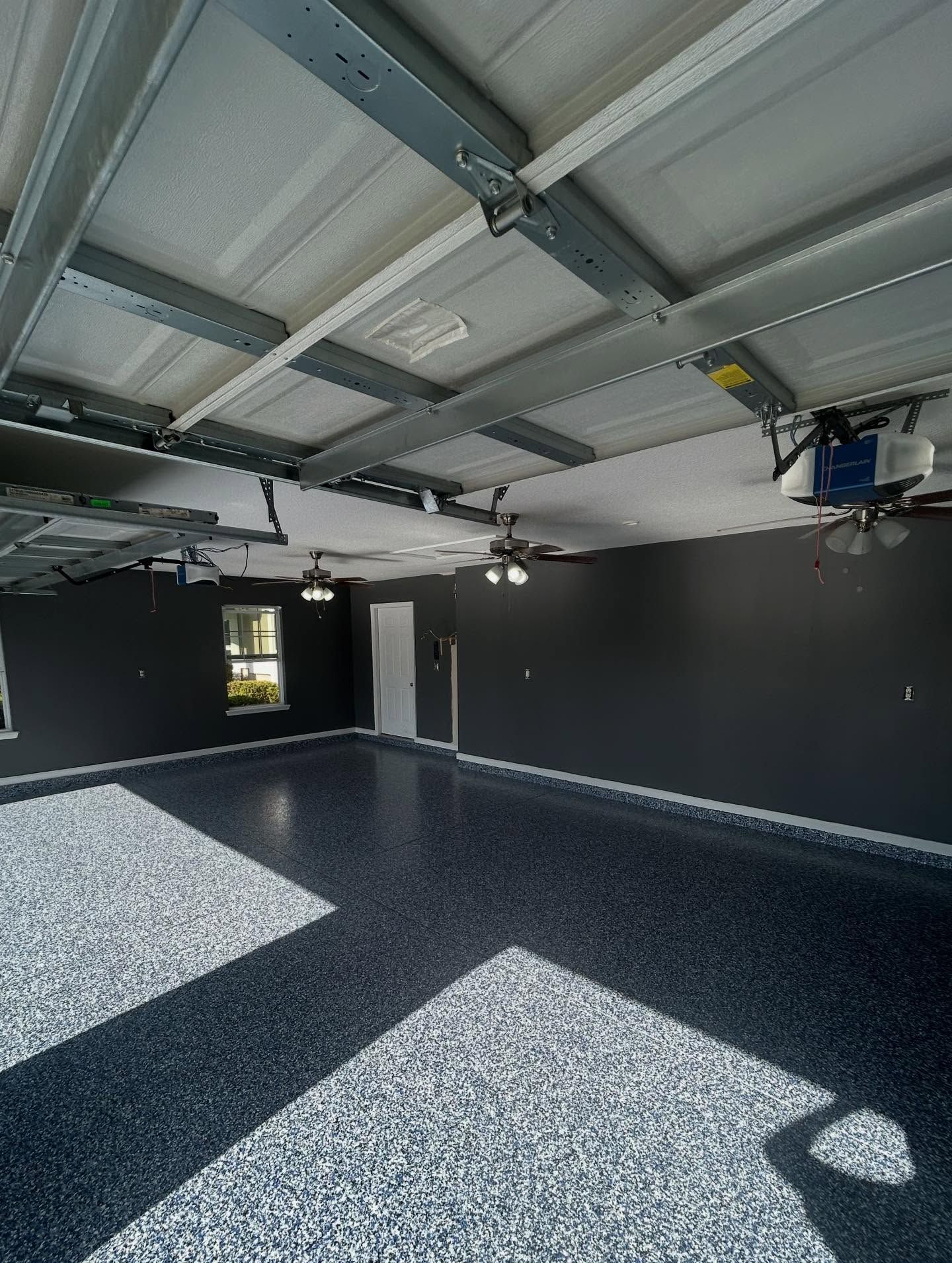
The Difference Between a Sealed Floor and a Coated One
Sealers and epoxy coatings are frequently described as interchangeable options for garage floors, but they function differently at the surface level. A sealer penetrates the top of the concrete and slows absorption—it does not create a structural layer above the slab. An epoxy system builds a bonded coating layer on top of the concrete that is mechanically separate from the slab itself, with a thickness that absorbs impact, resists chemical contact, and can be cleaned without reactivating stains. The coating depth Performance Epoxy applies exceeds standard specifications specifically because thicker material above the bond line extends how long the floor performs before showing wear at the surface.
After the epoxy is fully cured, the garage floor behaves completely differently from bare concrete. Oil dropped from a vehicle sits on the surface rather than soaking in and can be wiped up without leaving a stain. Water from wet vehicles beads and drains rather than spreading across the slab. The surface also reflects light differently than raw concrete, which makes the garage noticeably brighter without any change to the lighting. These are visible, immediate differences that appear the first time the garage is used after installation.
Performance Epoxy backs garage floor installations with a 15-year warranty on delamination, which is tied directly to completing the concrete prep and material application to the full process standard the crew follows on every job. The company is family-owned, licensed, and insured, and has operated in Jacksonville for ten years completing residential and commercial garage projects every week.
Questions Before Starting Your Project
The following questions address what happens during a garage floor epoxy installation, what the process requires, and what to look for in a finished floor.
Residential slabs in Jacksonville's suburban communities vary in age and condition, and those differences affect how preparation is approached before coating begins.
What preparation does a residential garage slab need before epoxy is applied?
The surface must be mechanically ground to open the concrete pores and remove any existing sealers, paint, or contamination—epoxy applied over a closed or contaminated surface will not bond and will begin peeling at stress points. The prep standard is the single most important factor in how long the finished floor holds.
How does applying epoxy at greater than standard material depth affect the garage floor?
Additional coating depth places more protective material between the surface and the bond line, which extends the floor's resistance to abrasion from foot traffic, tire contact, and dropped tools. Thinner applications meet the minimum required but leave less margin when the floor faces heavy or sustained use.
What happens if the concrete slab has existing oil stains before epoxy is installed?
Oil-contaminated concrete must be treated and ground before coating because oil in the pore structure prevents adhesion. Grinding removes the contaminated surface layer, and the prep process can address most staining conditions—though the extent of the contamination determines how much surface removal is required.
How does the one-crew-per-day scheduling work for a residential garage project?
A single residential garage is handled by one crew completing the job in its entirety from prep through final coat in a single workday, which keeps the project focused and avoids the continuity issues that come from splitting work across multiple visit windows. Both crews are deployed together only for larger or commercial-scale projects.
What should the finished garage floor look like to confirm it was applied correctly?
The coating should be consistent in sheen and thickness from wall to wall, with no thin patches near the perimeter or around floor drains where material tends to pull away during application. The surface should also be fully sealed—water or oil placed on any point of the floor should not darken or absorb into the material beneath.
Performance Epoxy handles garage floor epoxy installations across Jacksonville for homeowners who want a coated surface that performs reliably under daily vehicle and foot traffic. Performance Epoxy also installs garage floor epoxy in Ponte Vedra Beach, Orange Park, St. Augustine, Fernandina Beach, and Palatka. Call 904-316-6441 to request a free on-site estimate for your garage.