
Coating Systems That Hold Under Load and Chemical Stress
Industrial epoxy flooring in Jacksonville for manufacturing floors and heavy-use facilities with forklift traffic and chemical exposure
Industrial floors fail for predictable reasons: material applied too thin, concrete not properly profiled before coating, or cure time cut short to hit a handover date. Performance Epoxy in Jacksonville builds industrial epoxy systems with material depth and cure precision calibrated to the actual demands of manufacturing environments, warehouses, and heavy-use facilities. The 15-year delamination warranty covers only floors prepped and installed to specification, because prep quality and material depth are the variables that determine whether a floor holds under daily load or lifts at the seams within a year.
The installation sequence begins with concrete grinding to remove all contaminants and open the surface to a profile that accepts mechanical bonding. The epoxy system is then applied in layers, with mil thickness and chemical-resistance additives matched to the facility's specific use—a warehouse running electric forklifts requires a different specification than a processing facility handling daily solvent exposure. Cure time is monitored throughout rather than estimated by elapsed hours, because ambient conditions inside large industrial buildings affect how the material hardens at depth. Jacksonville's industrial parks in areas like Fruit Cove and Orange Park include a mix of tilt-wall construction and older concrete-slab facilities, and the concrete in older buildings often carries embedded contaminants from decades of use that require more aggressive grinding before any coating can be applied.
Request an evaluation of your facility floor to identify prep requirements and select the epoxy specification that matches your load and chemical exposure profile.
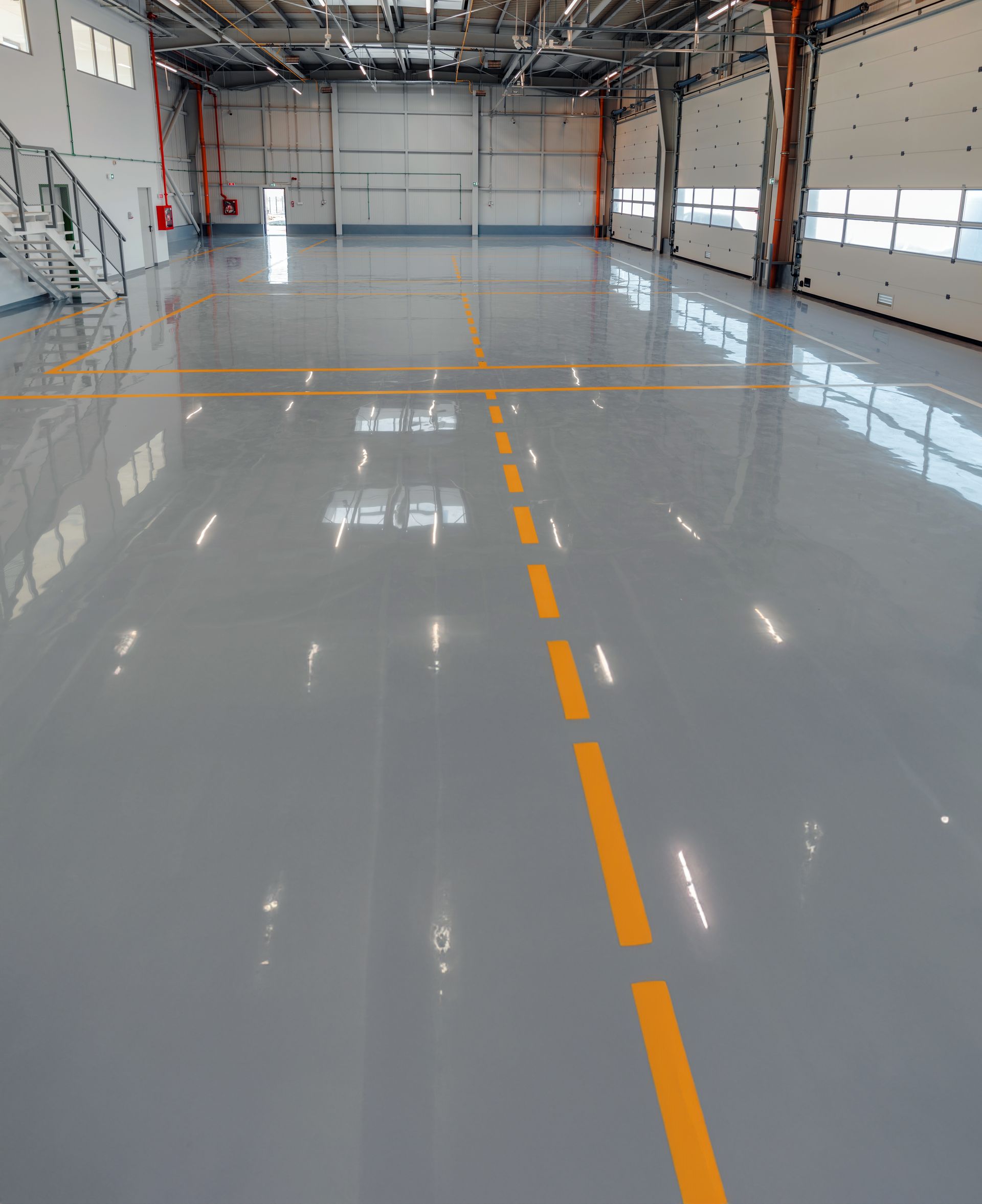
Why Industrial Epoxy Requires Layered Application and Monitored Cure
An industrial epoxy system is not a single product applied once—it is a layered build that begins at the concrete surface and adds thickness in controlled stages. Performance Epoxy applies heavier mil thickness than standard specifications call for in commercial applications, because industrial loads place sustained compressive and shear stress on the coating that standard thickness cannot distribute without developing micro-fractures at high-traffic points. Where chemical resistance is required, the additive formulation is selected based on the specific substances present in the facility rather than a general-purpose blend.
After installation, the floor presents a surface that resists the marking and surface breakdown that bare or thinly coated concrete develops under forklift tires and equipment pads. Chemical spills bead and can be removed without staining or etching the coating. Seams and joints do not show the lifting or separation that appears when material is applied without adequate thickness or when cure is not confirmed before traffic resumes. The observable difference between a properly installed industrial floor and a standard coating becomes apparent within the first six months of heavy use.
The 15-year delamination warranty is backed by the installation record—material depth, surface profile, and cure confirmation are all part of how Performance Epoxy documents each job. Facilities with specific compliance or safety flooring requirements should confirm those standards before installation begins so the coating specification can be adjusted accordingly.
Answers About How Industrial Epoxy Installation Works
Industrial flooring decisions affect production schedules, compliance requirements, and long-term maintenance costs. The questions below address the specifics of how the work is performed and what drives the technical decisions on site.
How is the concrete surface prepared for an industrial epoxy system?
Diamond grinding or shot blasting removes all surface contaminants, existing coatings, and embedded residue, then creates a surface profile that allows the epoxy to form a mechanical bond. Without proper profile depth, the coating adheres only at the surface level and will separate under repeated load stress.
What determines the mil thickness applied to an industrial floor?
Forklift weight, traffic frequency, and whether chemical exposure is present all affect the specification. Heavier loads require greater thickness to distribute compressive stress across the coating cross-section—a floor rated for pedestrian traffic will fail under forklift wheels if the thickness was not adjusted for that use.
Why is cure monitoring important during industrial epoxy installation?
Cure time in large industrial buildings is affected by air circulation, slab temperature, and humidity within the structure. Monitoring at depth—not just surface-level touch tests—confirms the material has reached working hardness before equipment is reintroduced, preventing compression damage to partially cured layers.
How does an older concrete slab affect the installation process?
Concrete in older Jacksonville industrial facilities often carries embedded oils, cleaning agents, or residue from prior processes that must be fully removed before bonding is possible. In some cases, this requires more aggressive grinding passes or surface treatment before the standard prep sequence can begin.
What maintenance does an industrial epoxy floor require after installation?
Routine sweeping and mopping with compatible cleaning agents keeps the surface intact. Abrasive cleaners or solvents not rated for epoxy surfaces will degrade the top layer over time—the facility's cleaning protocol should be confirmed against the coating specification before the floor is put into full service.
Performance Epoxy also installs industrial epoxy flooring in Ponte Vedra Beach, Orange Park, St. Augustine, Fernandina Beach, and Palatka. To schedule a facility assessment and discuss your floor specification, connect with Performance Epoxy to begin the evaluation process.